Topical relevance
Links are pursued from websites and pages that genuinely overlap with your market, audience and subject expertise.

Build search authority through relevant editorial placements, digital PR, useful assets and outreach grounded in quality, transparency and commercial priorities.
Enquire NowAuthority strategy
Link building starts with understanding why competitors are trusted, which pages attract citations and where your own authority is too weak to compete. The campaign is then designed around realistic editorial opportunities—not arbitrary link quotas.
Enquire Now
Campaign intelligence
We map authority by topic, page type, competitor, referring domain and acquisition pattern. This shows whether the next campaign needs editorial contributions, data-led PR, resource links, relationship outreach or stronger linkable content.
Links are pursued from websites and pages that genuinely overlap with your market, audience and subject expertise.
Placements must add contextual value to the referring page rather than exist as isolated, forced or sitewide links.
Campaign priorities are shaped by the link profiles, content assets and authority gaps visible across the search landscape.
Target pages and anchor context are mapped to the categories, services and resources that matter to business growth.
Acquisition pathways
A strong programme combines relationship-led outreach, editorial contribution and campaignable assets. We choose the route based on the publication, target audience, page objective and strength of the story or resource available.

Editorial outreach
We identify publishers, industry resources, associations, partner ecosystems and specialist websites where your expertise can improve an existing page or support a new editorial contribution.

Digital PR
Campaigns are developed around credible business insights, original data, expert opinions, timely commentary and newsworthy assets that journalists and publishers can reference.
Linkable assets
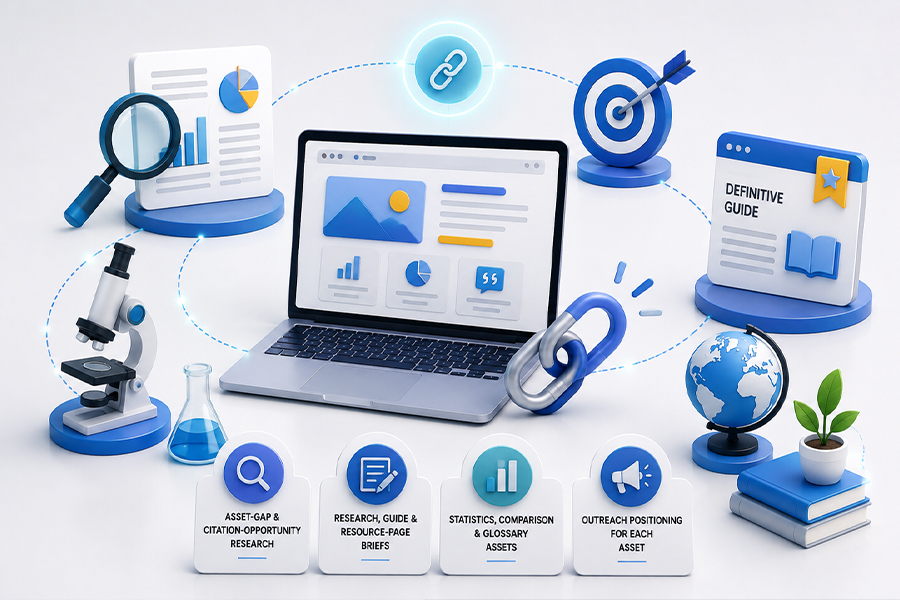
We strengthen the website with assets that make outreach more credible, including original research, practical tools, definitive guides, statistics pages and visual resources.
Quality control
Domain metrics can be useful filters, but they do not prove editorial value. Each opportunity is reviewed manually so the campaign does not trade long-term trust for short-term volume.
Enquire NowDoes the website serve a genuinely related audience?
Is the link naturally supported by the surrounding content?
Does the domain show credible search presence and real content activity?
Are ownership, publishing standards and user experience trustworthy?
Will the link sit on a useful, indexable and relevant page?
Is the opportunity free from obvious manipulation, networks or spam signals?
Campaign models
The outreach reason, publisher type and asset format change by business model. A local campaign should not look like a SaaS campaign, and an ecommerce campaign should not copy a B2B trade publication strategy.
Build visibility around technical expertise, industry insight and decision-stage resources where credibility matters as much as rankings.
Strengthen product-category authority with comparison assets, integrations, original data and specialist software publications.
Support commercial categories with buying resources, product expertise, publisher relationships and campaignable consumer insights.
Develop location credibility through local media, community resources, associations, sponsorships and regionally relevant partnerships.
Outreach workflow
Each stage has a clear decision, deliverable and quality check. This keeps prospecting focused, outreach defensible and reporting transparent.
We review referring domains, link velocity, anchor patterns, lost links, competitor acquisition and the pages that currently attract authority.
Commercial priorities are balanced with realistic linkability. We decide which pages need direct support and which supporting assets can attract stronger editorial interest.
Every prospect is reviewed for relevance, editorial standards, search visibility, audience fit and placement risk before outreach begins.
We develop a specific reason for each contact to engage—an expert contribution, original asset, data point, story, replacement resource or partnership opportunity.
Communication is personalised, tracked and followed up responsibly. The goal is not only one placement, but a repeatable network of relevant editorial relationships.
Live links are checked for destination, indexability, context, anchor usage and status. Campaign learning is used to improve the next prospecting and content cycle.
Link reporting
Reporting separates outreach activity from editorial outcomes. You can see which links are live, how they were acquired, which pages they support and where campaign learning should be reinvested.
Track
Prospects, pitches, responses, conversations, placements and lost links
Connect
Referring-domain growth with target-page visibility, referral engagement and enquiries
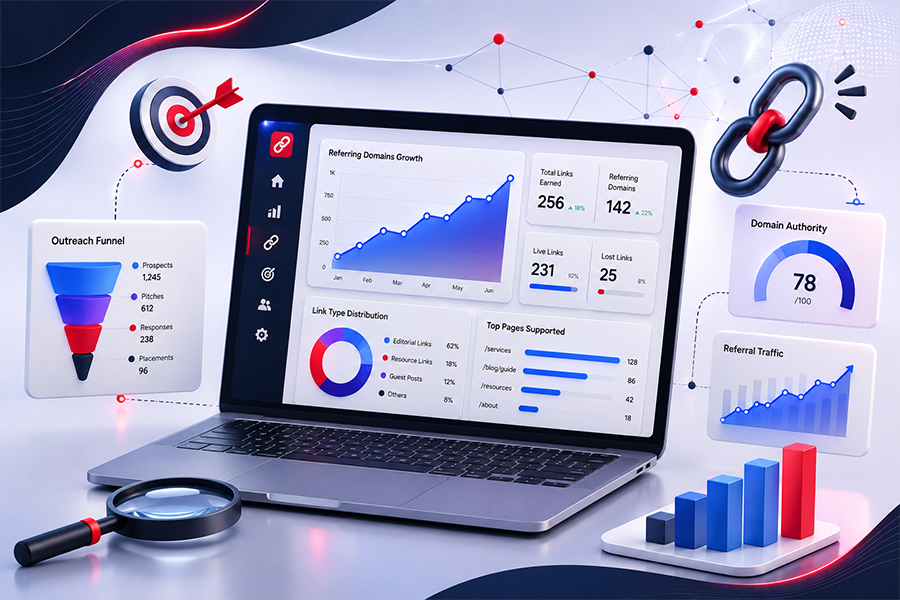
A transparent record of live placements, referring pages, destination URLs, anchors, acquisition route and verification status.
Monitor the growth and quality of referring domains, link distribution, lost links and the authority profile of priority page groups.
Review ranking, impressions, clicks and visibility changes for target topics while recognising that links work alongside content and technical SEO.
Track meaningful referral visits, engaged sessions, enquiries and assisted conversions where analytics and attribution allow.
Measure qualified prospects, response rates, active conversations, placements and the campaign angles producing the strongest editorial interest.
Identify lost links, changed destinations, suspicious new links and opportunities to reclaim or update valuable historical placements.
Campaign readiness
Outreach performs better when the website, expertise and supporting resources give publishers a credible reason to reference the brand.
Link building FAQs
Understand quality standards, campaign timing, anchor strategy, reporting and the difference between earned authority and manufactured link volume.
The scope can include backlink and competitor analysis, target-page planning, linkable-asset strategy, prospect research, opportunity qualification, personalised outreach, digital PR, expert contributions, placement verification and campaign reporting. The exact mix depends on your market, current authority and available assets.
We do not promise artificial quantities or guaranteed placements because genuine editorial links depend on relevance, publisher decisions and campaign quality. We agree on activity, qualification standards, outreach scope and reporting, then focus on earning links that can withstand scrutiny.
We assess topical relevance, editorial context, organic visibility, publishing standards, audience fit, page quality, placement position and risk signals. Third-party authority metrics can support the review, but they are never used as the only quality test.
No. We do not use private blog networks, disguised link farms or bulk packages designed to manipulate authority. Where a legitimate publication has sponsorship or contributor policies, any commercial arrangement must be transparent, relevant and handled according to search-engine guidelines.
Sometimes, but direct commercial-page links are harder to earn and must make editorial sense. We often combine selective direct opportunities with supporting guides, research, tools or resources that attract links and internally strengthen the relevant commercial pages.
Prospecting and outreach can begin early, but placements and search impact usually develop over several months. Timing varies with market competition, brand credibility, asset quality, publisher response cycles, website condition and how closely link building is integrated with content and technical SEO.
Anchor text is kept natural and editorially appropriate. We prioritise brand names, URLs, topical phrases and contextual wording rather than forcing exact-match commercial anchors. Existing anchor distribution and risk are reviewed before recommendations are made.
Yes. Link reclamation can include finding lost links, correcting broken destination URLs, restoring removed resources, consolidating redirected pages and contacting publishers when a valuable link can reasonably be recovered or updated.
Reporting can cover qualified prospects, outreach activity, responses, live and pending placements, link quality, target pages, anchors, referral traffic, lost links and search visibility trends. We separate completed activity from earned outcomes so the campaign remains transparent.

Get a clear roadmap for campaigns, creative, website, SEO, and performance before you scale your next project.